
Last updated November 15, 2026
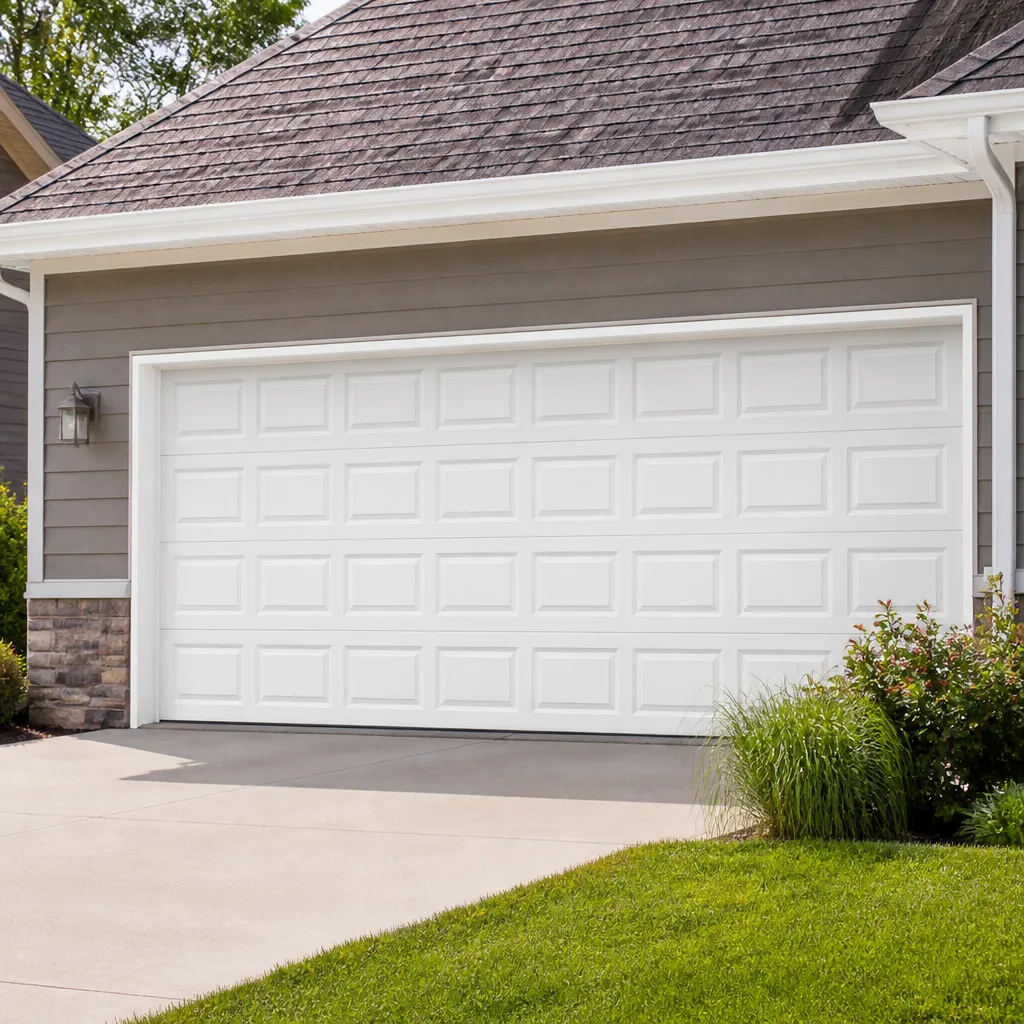 Raised-panel steel
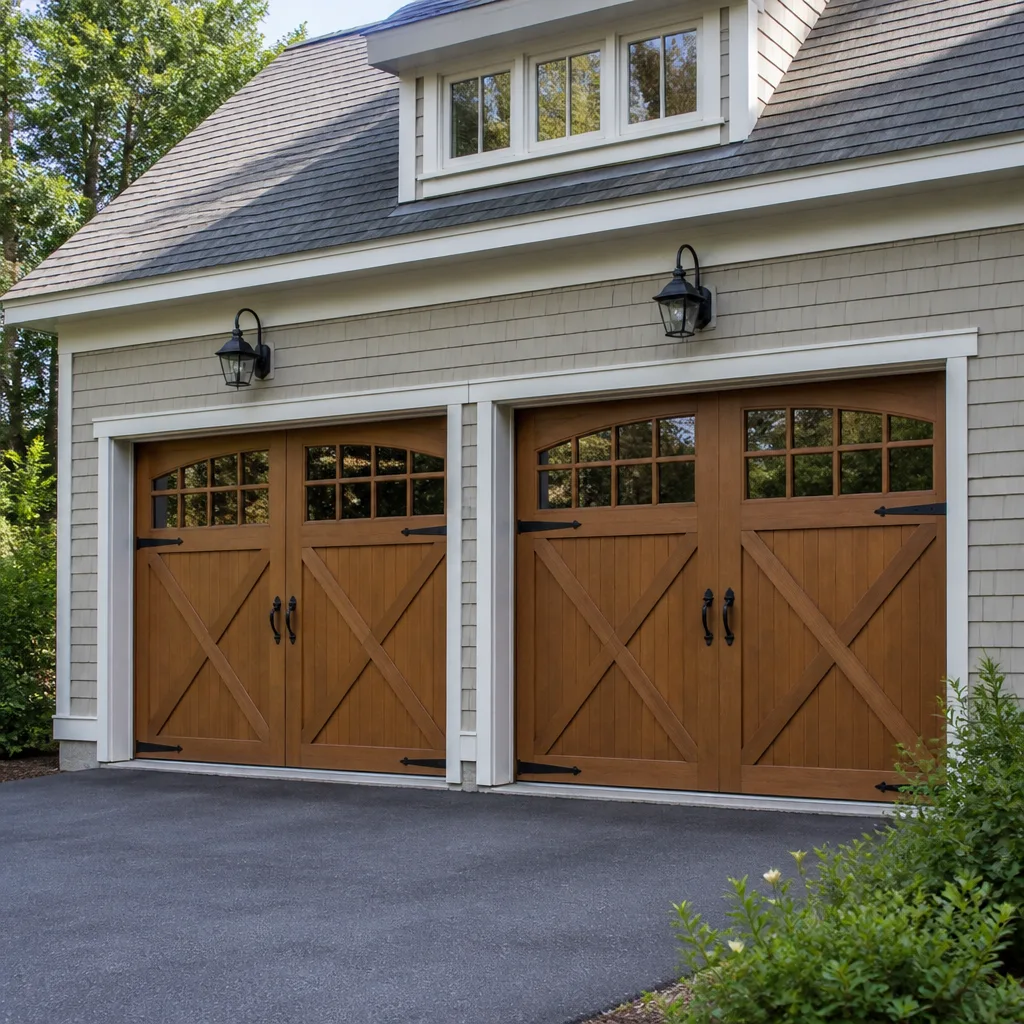 Carriage house
 Modern flush
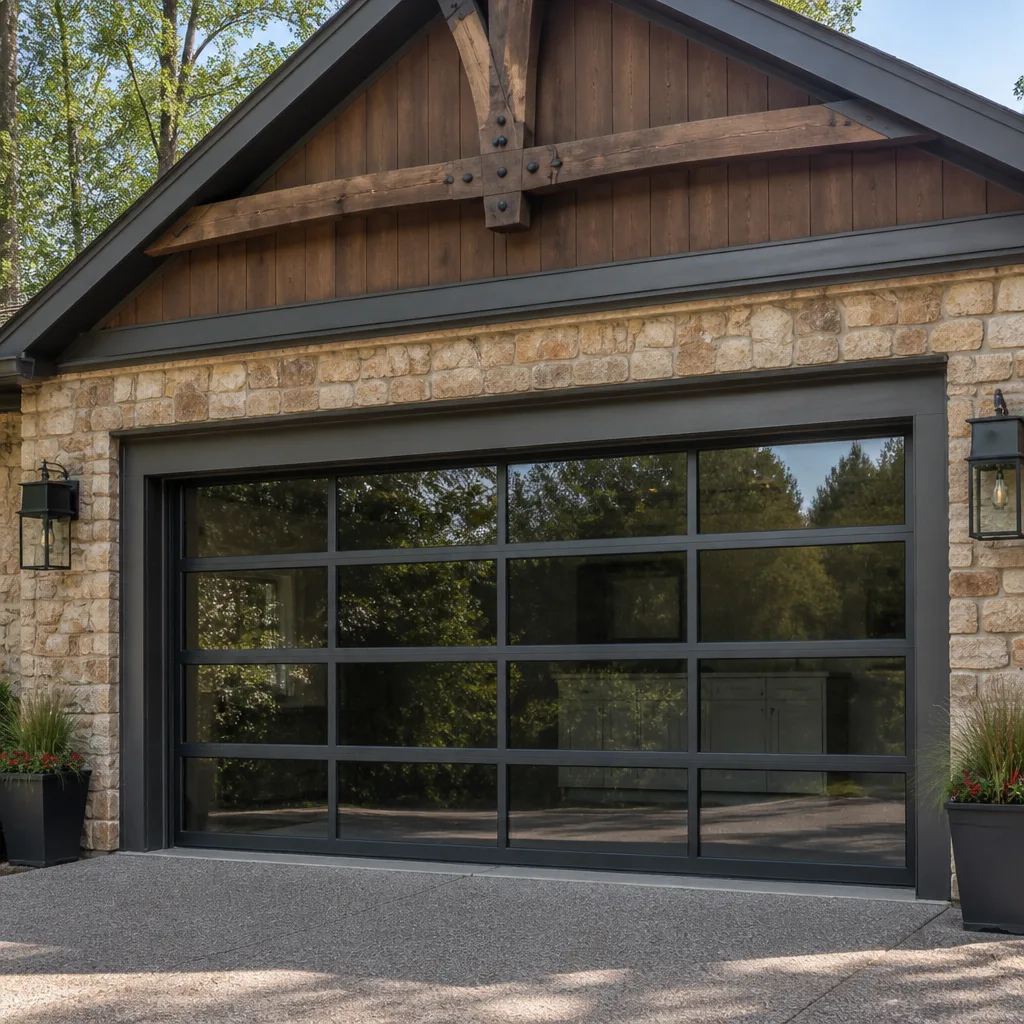 Full-view glass
 LiftMaster openers
 Chamberlain openers
Full 25-point door and opener safety check with every visit - springs, cables, rollers, tracks, and your LiftMaster or Chamberlain opener included
You get a price before we start. It does not change when the pro arrives.
Get your free estimateGarage Door Emergency Preparedness Guide for Naperville Homes
Most garage door failures aren’t random. The door that won’t open on a cold Naperville morning has usually been sending signals for months: a little more noise, a slightly slower start, a hesitation at the halfway point. When the temperature drops hard, that borderline door finally gives. And the homeowner standing in a dark garage at 6am discovers a second problem on top of the first – they don’t know how to disengage the opener and lift the door by hand. This guide fixes that. We’ll walk through the first ten minutes of a failure, safe manual operation, a power outage protocol, how to secure the door when it won’t close, and a one-page record sheet you keep on the wall so a technician already knows your equipment before they arrive.
Quick Answer
If your garage door fails, stay calm and don’t force it. First, identify whether the problem is the opener (motor runs but the door doesn’t move) or the door itself (spring, cable, or track). If a spring has visibly broken or the door is hanging crooked, stop and call a professional – (833) 467-3941, with phones answered 24/7. If the opener is dead, pull the red manual release cord only when the door is fully closed, then lift by hand.
Styles & brands we work with
- Raised-panel steel
- Carriage house
- Modern flush
- Full-view glass
- LiftMaster openers
- Chamberlain openers
Table of Contents
- The First 10 Minutes of a Garage Door Failure
- How to Safely Operate Your Door by Hand
- Power Outage Protocol for Naperville Homes
- How to Secure a Garage Door That Won’t Close
- Your One-Page Garage Door Record Sheet
- Spring Failure vs. Opener Failure: How to Tell the Difference
- Winter Readiness for Naperville’s Cold Snaps and Ice
The First 10 Minutes of a Garage Door Failure
What you do in the first ten minutes decides whether this is a fifteen-minute fix or a much bigger problem. The single most important thing is to slow down. Understand what the door is telling you before you touch a control.
Work through this decision tree:
- The door is stuck open and won’t come down. Check whether the opener motor is running. If the motor runs but the door doesn’t move, a broken spring or snapped cable is most likely. Don’t keep hitting the button – you’ll damage the opener gear. If the motor is silent, check the wall switch and the breaker.
- The door is stuck closed and won’t go up. Press the wall button. If you hear the motor but the door stays put, the door is likely bound up or the opener is disengaged. If the motor hums and stops, the travel limit may be misadjusted, or the door is too heavy for the opener because a spring has weakened.
- A spring has visibly broken. One spring on the torsion bar (or one of the two extension springs above the door) is snapped. Stop. Don’t try to lift the door and don’t touch the spring. This is a job for a trained technician – torsion springs are under extreme tension and can cause serious injury if handled by someone who isn’t trained and equipped.
- The opener is dead. No hum, no light, nothing. Check the breaker, the outlet the opener is plugged into, and the remote batteries. If those check out, call for garage door opener repair.
Once you’ve identified the category, you can decide whether to try a manual release (only for opener failures with the door closed) or call for garage door repair. In Naperville, we’ve seen homes from the older neighborhoods near downtown to the newer construction out toward the west side all run into the same decision points – and the decision tree is identical.
How to Safely Operate Your Door by Hand
When the opener fails and you need to get the car out, manual operation is the answer. But there’s a right way and several wrong ways, and the wrong ways cause cable derailment, bent tracks, and pinch injuries.
Here’s the sequence most homeowners get wrong:
- Close the door first. Never pull the red release cord while the door is open or partially open. The springs are under load, and releasing the carriage while the door is up can let it slam down with everything it has.
- Locate the release handle. It’s the red cord with the plastic handle hanging from the opener trolley. On most LiftMaster and Chamberlain openers, the trolley sits along the rail above the door.
- Pull straight down, not sideways. A straight pull disengages the carriage cleanly. Yanking at an angle bends the trolley arm.
- Lift slowly with both hands. Once the door is disengaged, lift from the center bottom edge with an even pull. If the door feels much heavier than usual or won’t stay up at the halfway point, a spring is failing – set it back down gently and call for help.
- Re-engage correctly. To reconnect, close the door fully, then press the opener button once. The carriage should slide back and lock. If it doesn’t latch, don’t force it; the trolley may be out of position and needs a technician.
The single biggest mistake we see: pulling the release cord while the door is open, then letting the door come down while the opener is still trying to reach its limit. That’s how cables jump their drums. If you’ve ever wondered why a garage door specialist tells you to leave the disconnection to a trained hand when in doubt, this is why.
A note on the red cord
The red cord is a safety device, not a convenience. On a door with a failing spring, it’s the fastest way to turn a repairable problem into a dangerous one. If you’re not sure of the door’s condition, don’t pull it.
Power Outage Protocol for Naperville Homes
Naperville loses power in winter storms and summer thunderstorms alike. If the power is out and your car is inside the garage, you have options – and if you don’t have a battery backup opener yet, you’ll want to know the plan before you need it.
Here’s what to do during an outage:
- Do not pull the red cord with the door under tension. If the door is fully closed and the springs are healthy, manual release is safe. If the door is open or the springs feel weak, wait or call a technician.
- Check the battery backup. Many modern LiftMaster and Chamberlain openers have a built-in battery backup that keeps the door operating through a short outage. If yours has one, test it twice a year with the power cut at the breaker.
- If you’re buying an opener, choose battery backup. It’s the single best preparedness feature for a Naperville home, given the frequency of winter outages across the area.
- Keep a manual plan on the wall. Tape a card inside the garage door that says, in plain language, “If power is out: door closed, pull red cord straight down, lift with both hands, close fully before reconnecting.”
Battery backup openers aren’t exotic anymore – most LiftMaster, Chamberlain, and Genie models sold today offer them, and we can install one in most Naperville garages without changing the door. For more on opener options, see our opener service page.
How to Secure a Garage Door That Won’t Close
A door that won’t close leaves the house open to weather and to anyone walking by. You need interim measures that actually work while you wait for a technician.
Here’s what works, in order of effectiveness:
- Lower the door manually to the closed position. If the opener is the problem, disengage it (with the door fully closed per the manual release protocol above) and lower the door by hand until it touches the floor. In most cases it will rest there unless the springs are completely gone.
- Block the track. Use a C-clamp or vise grip on the vertical track just above a roller, on both sides, so the door can’t be lifted from outside. This is the single most effective interim measure.
- Engage the manual lock. Many older doors have a sliding side lock – it’s still worth using. Newer doors often rely on the opener for security, so if you have a side lock, use it.
- Close the gap. If the door is a few inches off the floor, place a rolled towel or foam pool noodle at the bottom edge to keep out cold air and small pests. This is not security – it’s weather sealing.
- Cover the windows. If the door has windows and it’s open, hang a blanket behind it to obscure the interior.
Don’t try to prop a heavy door open with a broomstick on the inside, and don’t wedge anything between the door and the floor on a door with a working spring – that’s how panels get bent. If the door is hanging crooked or the cables are slack, don’t lower it any further on your own. Call for garage door repair in Naperville and we’ll take it from there.
Your One-Page Garage Door Record Sheet
When a technician arrives, the faster they know what they’re working on, the faster they fix it. A record sheet you fill out once saves ten minutes on every future call and gives you a reference point for “normal.”
Fill out a sheet for each door on your property and tape it inside the garage near the opener. Here’s what to record:
- Door make and model. Stamp or sticker on the inside panel – Clopay, Amarr, Wayne Dalton, Raynor, and others all label their doors.
- Door size. Width x height, measured once at the outside opening.
- Spring type and count. Torsion (bar above the door) or extension (springs above the tracks), and how many. Note the wire color painted on the spring if you can see it – that’s a size code technicians read to order the right part.
- Cable gauge. Only if it’s stamped on the cable end. Otherwise leave blank; the technician will measure.
- Opener make and model. On the back of the motor housing or the inside of the light lens cover. LiftMaster, Chamberlain, Genie, and Craftsman are the most common in Naperville homes.
- Opener date code. Usually a small sticker or laser etch on the housing.
- Last service date and what was done. Even if it was just a lubricated hinge – write it down.
- Battery backup? Yes or no, and the battery’s install date.
Hand this sheet to the technician and they can often bring the right spring or opener module on the first trip. We keep parts for the eight brands we service – LiftMaster, Chamberlain, Genie, Clopay, Amarr, Wayne Dalton, Craftsman, and Raynor – which makes the first-trip odds better, but a record sheet makes them best.
Spring Failure vs. Opener Failure: How to Tell the Difference
The most common misdiagnosis we see is a homeowner replacing an opener when the real problem is a spring. Here’s how to tell them apart before you spend money on the wrong fix.
Listen to what’s happening:
- Motor runs, door doesn’t move, no grinding. Likely a broken spring. The opener is doing its job; the door is too heavy for it to lift.
- Motor runs, door moves a foot and reverses. Likely a travel limit or photo-eye issue, or a binding door. Check the sensors first (small lenses at the bottom of each track – wipe them off, make sure the LED is solid, not blinking).
- Motor hums then stops, or grinds loudly. Likely the opener gear or drive. On a LiftMaster or Chamberlain with a chain or belt drive, a stripped gear is a common failure point after many years of use.
- Motor is silent, wall switch does nothing. Check the breaker and outlet first, then assume the opener board or capacitor. Call for a diagnosis.
- Loud bang from the garage, door won’t open. That’s a broken torsion spring, without a doubt. Do not try to lift the door.
In our experience across Naperville, roughly half of the “opener is broken” calls we get during cold snaps are actually spring failures. A trained technician diagnoses in minutes what takes a homeowner an afternoon of guessing. When in doubt, call.
The safety line
Springs and cables are the dangerous parts of any garage door. They carry the full weight of the door plus tension, and they fail suddenly. Never try to wind, unwind, or replace a torsion spring yourself – the tools alone are specialized and the injury risk is real. This is the one part of garage door work we tell every homeowner to leave to a trained professional.
Winter Readiness for Naperville’s Cold Snaps and Ice
Cold is the final trigger on a door that was already borderline. When temperatures swing twenty or thirty degrees in a day – which happens in Naperville every winter – metal contracts, grease stiffens, and springs that were just barely hanging on finally snap.
The good news: a handful of habits before the first hard freeze prevents most of those calls.
- Lubricate hinges, rollers, and springs with a garage-door-specific lubricant. Not WD-40, which attracts dust. A lithium or silicone spray on the metal-on-metal contact points does the work.
- Test the balance of the door by hand. Close it, disengage the opener, and lift to about halfway. It should stay there with light effort. If it wants to fall or feels very heavy, the springs are done or close to it – get them checked before winter.
- Wipe the photo-eye lenses. Cold weather often comes with condensation, snow spray, and road salt kicked up by the car. Dirty sensors are the most common “mystery” reversal.
- Check the weather seal. A stiff, cracked bottom seal lets in cold air and can freeze to the floor, breaking the door loose when you open it.
- Look at the door panels from inside. Cracks in wood, dents in steel, and loose hinges are all early warnings. Ignoring them means finding out about it at the worst possible time.
- Clear ice from the tracks, not from the door. If the door has frozen, don’t pry or pour hot water – that can crack the seal or warp the bottom panel. Loosen ice along the track with a plastic scraper and let the door free itself.
We handle repair, opener service, and new installation under one roof, so it never matters to us whether the fix is a $200 spring or a $2000 door – we fix what’s broken. For a broader look at what we do across Naperville, visit our Naperville page.
Common Mistakes to Avoid
- Pulling the red release cord while the door is open. The door can slam shut, and the springs can whip the cables off their drums. Always close the door first, then disengage.
- Bumping the wall button repeatedly when the door won’t move. If the door is stuck because a spring is broken, each press strains the opener gear a little more. Stop pressing and diagnose.
- Using WD-40 on garage door springs and hinges. It thins the existing lubricant and attracts grit. In Naperville winters, that grit turns into a gritty paste that accelerates wear.
- Replacing the opener when the spring is broken. A new opener will fail in the same way – it isn’t built to lift a door without spring support. This is one of the most common wasted purchases we see.
- Prying a frozen door off the floor. Scraping the panel or cracking the bottom seal turns a thawing job into a replacement job. Loosen ice at the track instead.
- Assuming the photo-eye is fine because the LED is on. A dim or flickering LED means misalignment. Wipe the lenses and check the alignment before assuming the opener is bad.
- Not writing down your equipment. Two years after a repair, no one remembers what spring was installed. A record sheet is five minutes that saves real time on the next call.
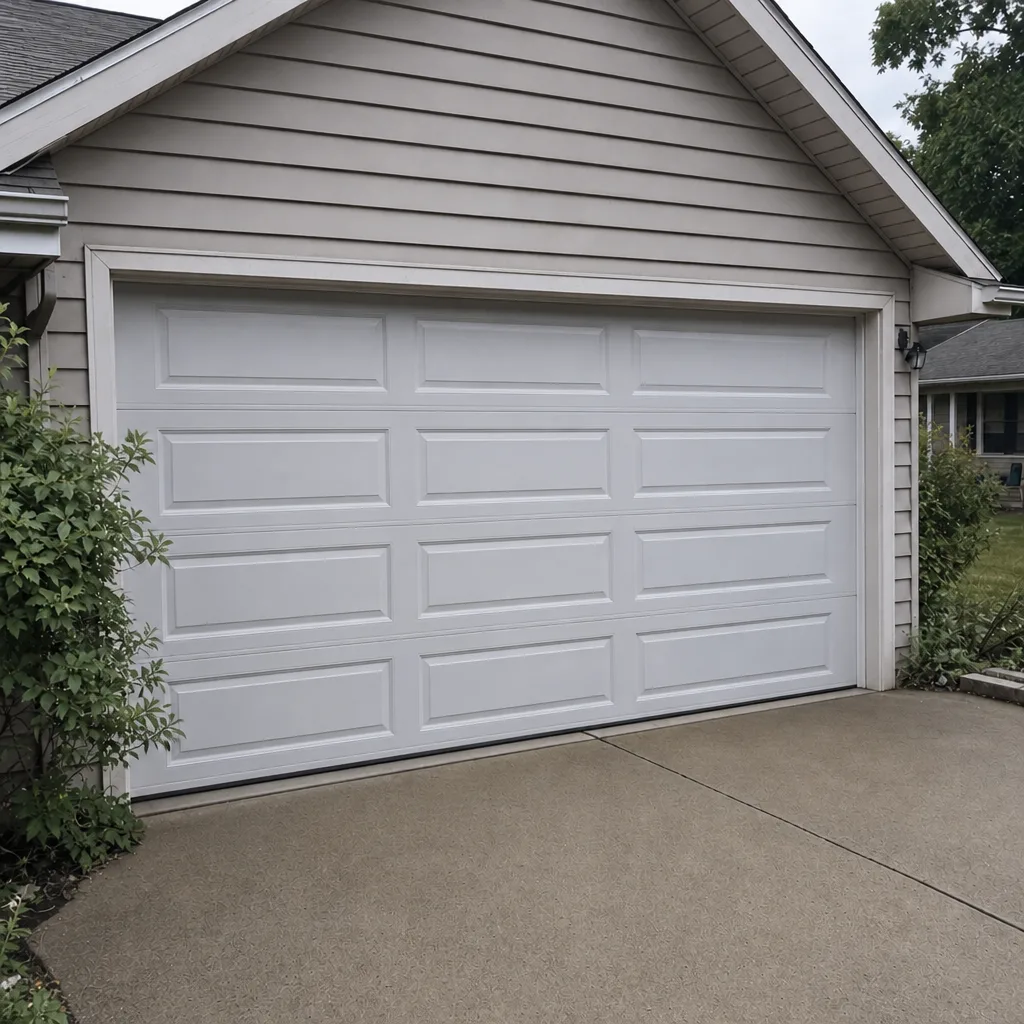
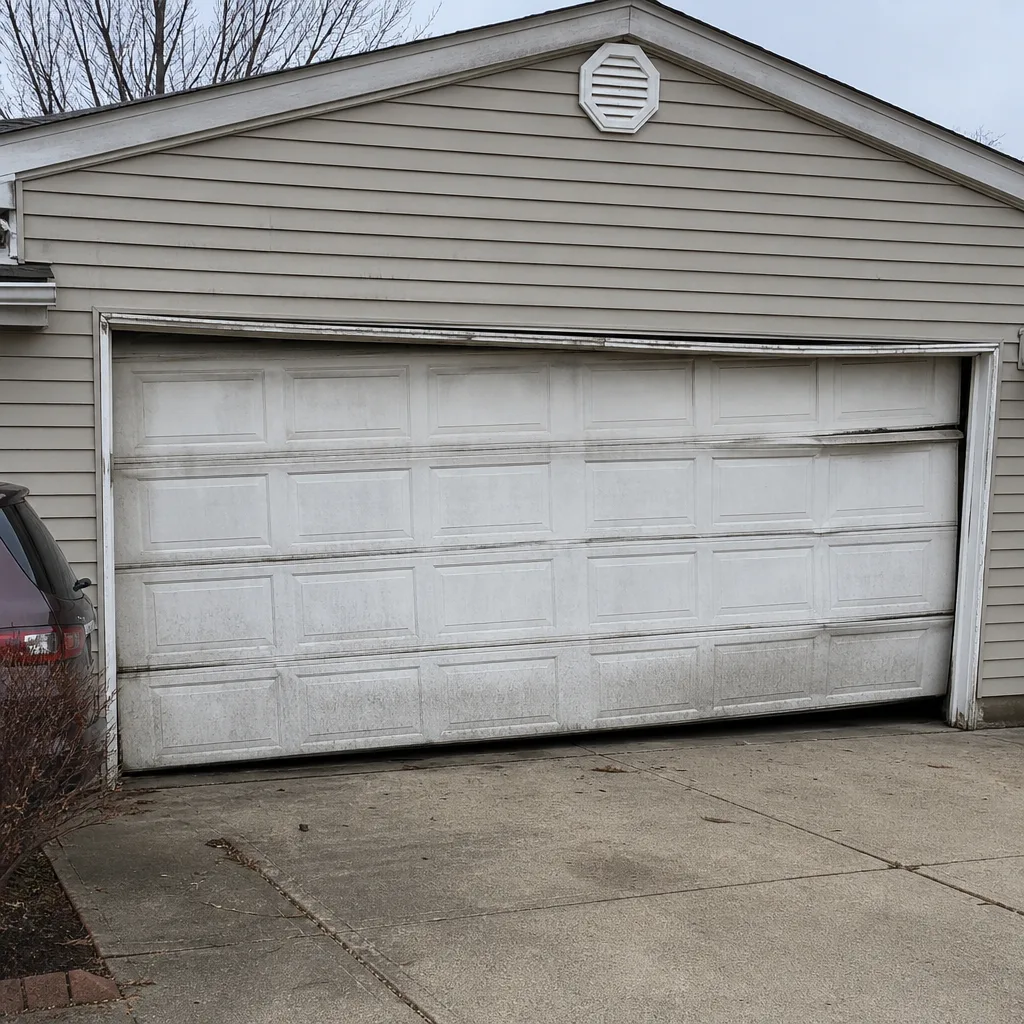
See the difference
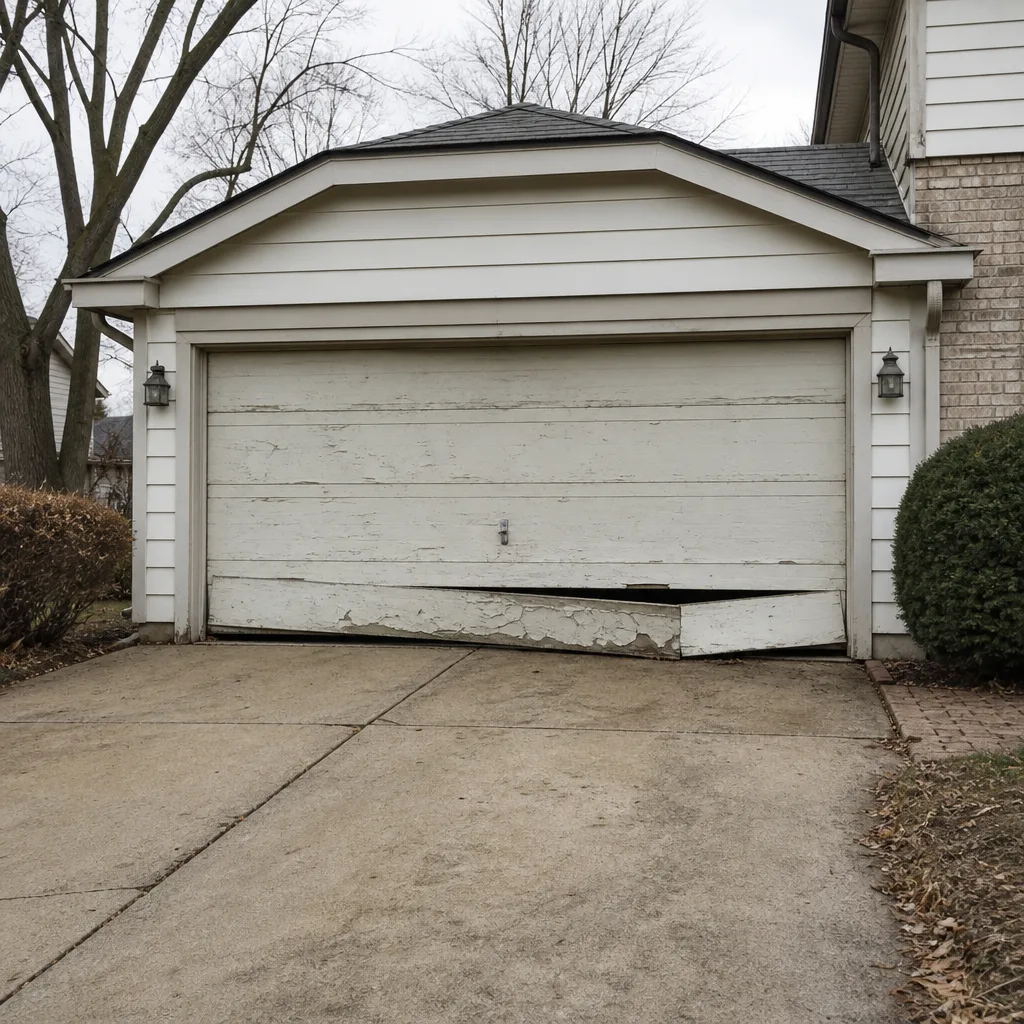 Before
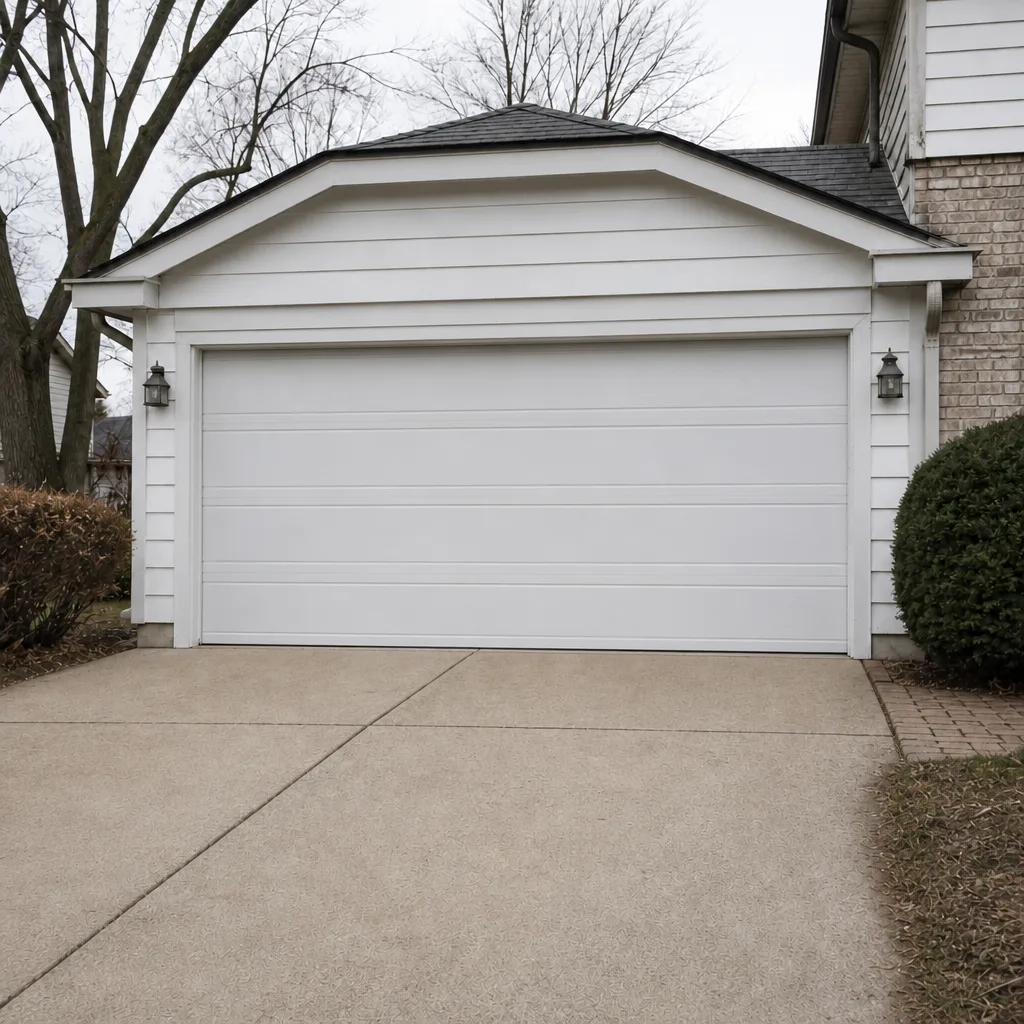 After
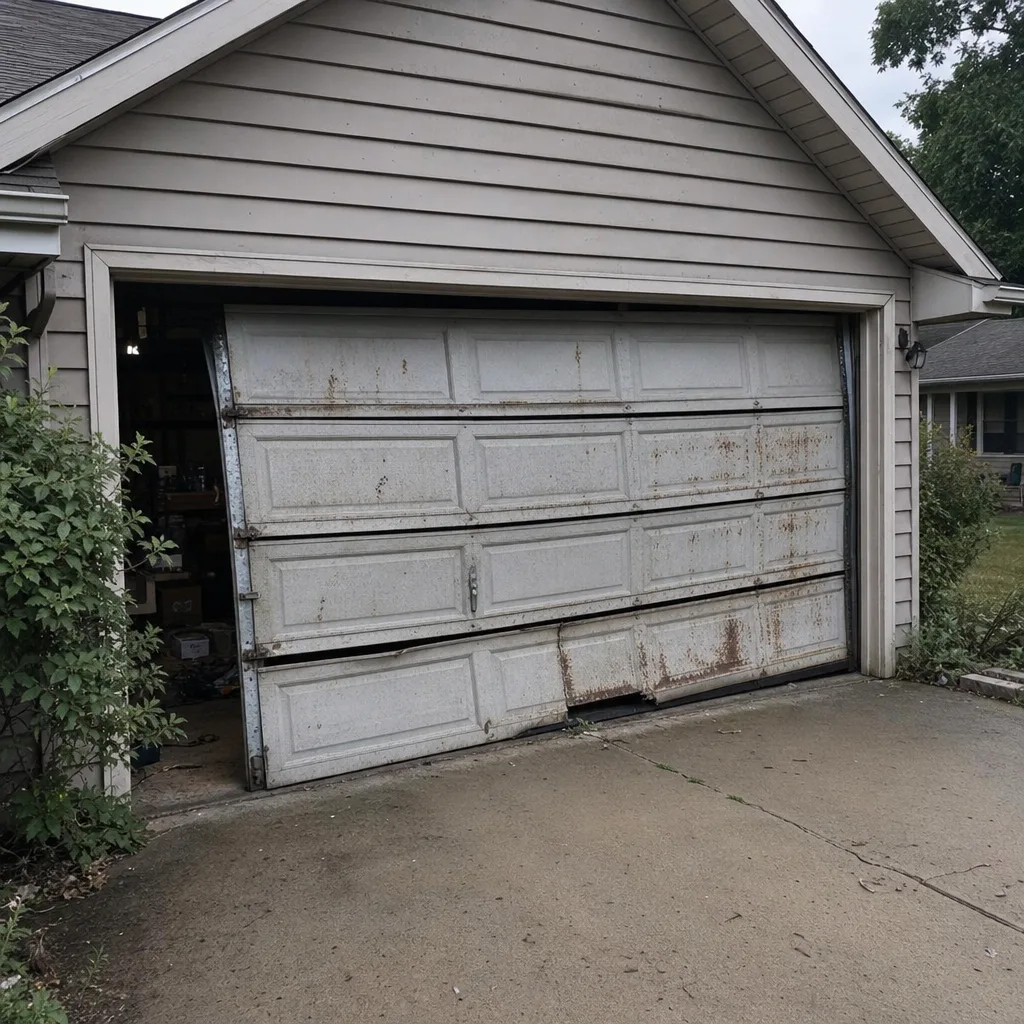 Before
 After
 Before
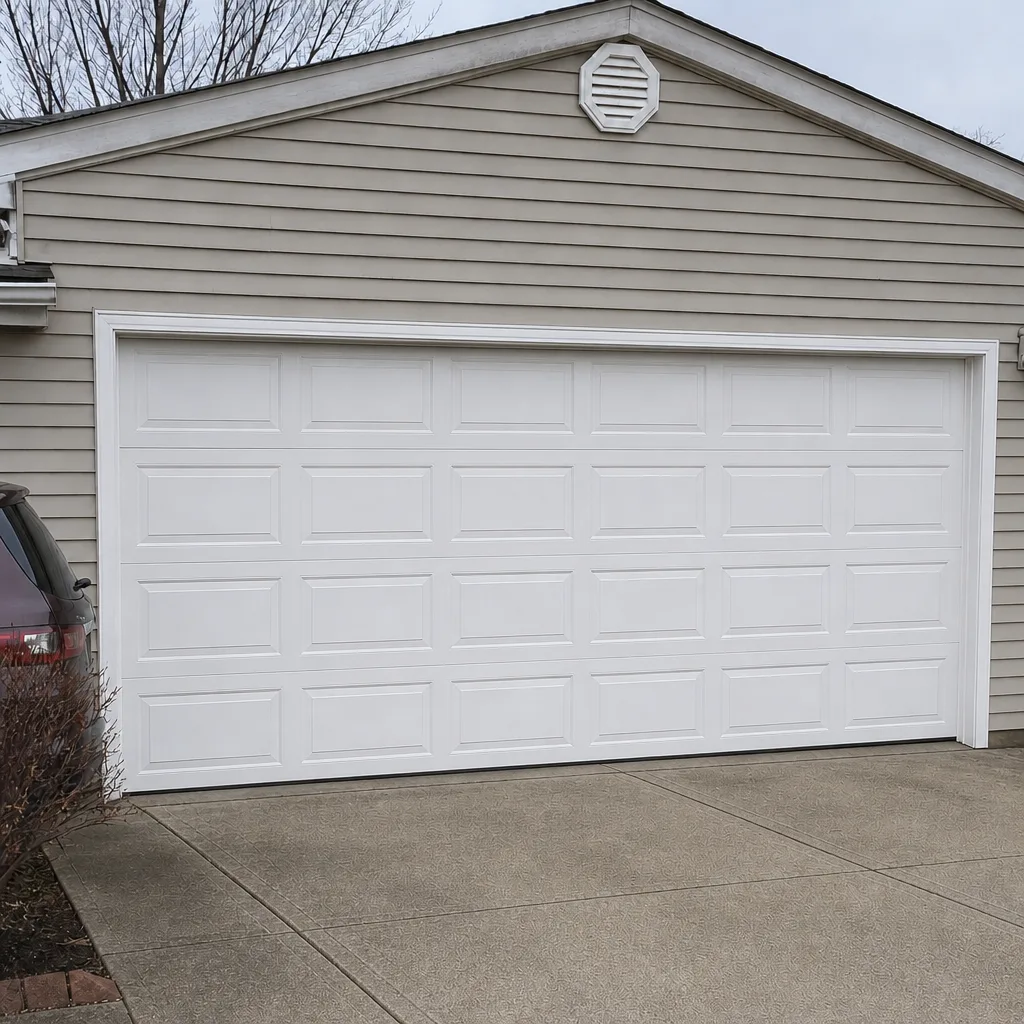 After
When to Call a Professional
Some garage door problems are safe to troubleshoot yourself, and some aren’t. Call a trained professional right away if: a torsion spring has visibly broken (one side of the bar is loose or the spring is in two pieces); a cable is slack, hanging off the drum, or has snapped; the door is crooked, binding, or won’t stay in a track; the opener motor runs but the door doesn’t move; or the door has dropped or slammed on its own. Any of these need trained hands – and a couple are genuinely dangerous to touch.
Steadfast Garage Door Repair offers free estimates in Naperville – call (833) 467-3941. We answer 24/7, with fast dispatch from 7am to 7pm. The written estimate sets the price, and we quote it before any work begins, so you’re not guessing what the fix will cost.
Frequently Asked Questions
Identify whether the problem is the opener or the door. Press the button and listen – if the motor runs but the door doesn’t move, suspect a broken spring, and stop pressing the button. If the motor is silent, check the breaker and outlet. Don’t pull the red release cord until you’ve confirmed the door is fully closed and the springs look intact. Call (833) 467-3941 for an exact quote – estimates are free, and we answer 24/7.
Yes, if the door is fully closed and the springs are healthy. Pull the red release cord straight down to disengage the opener trolley, then lift the door with both hands from the center. Never disengage while the door is open or partially open, and never force a door that feels much heavier than usual. If it’s a LiftMaster or Chamberlain opener with battery backup, you may not need to do anything – test the backup periodically.
Spring replacement is priced per job by a written estimate after a technician inspects the door. A matched pair is typically replaced together, so the pair costs more than a single spring. We quote the exact price before any work starts, so there are no surprises. Call (833) 467-3941 for a free estimate.
In many cases, yes. We answer 24/7 and dispatch Sunday through Friday, 7am to 7pm, with same-day service available for most repair calls. A call outside dispatch hours is booked into the next opening, Sunday through Friday, 7am to 7pm. Call (833) 467-3941 and we’ll give you the soonest available time.
No – the written estimate sets the price. We quote the repair after inspecting the door, and you approve it before any work begins. If a technician finds a bigger problem once the door is apart, they explain it, give you a new written number, and you decide whether to proceed. Nothing happens without your sign-off.
Lubricate hinges, rollers, and springs with a garage-door-specific spray, test the door’s balance by hand, keep photo-eye lenses clean, and inspect the bottom weather seal for cracks before the first hard freeze. If the door feels heavy or won’t stay up halfway, get the springs checked before cold weather makes the decision for you. We work on what you already have – LiftMaster, Chamberlain, Genie, Clopay, and the other brands common in Naperville homes.
The Bottom Line
A garage door emergency is usually the end of a long, quiet decline – a spring that was weakening, a hinge that was dry, an opener that was straining. The countermeasure is preparation. Know your equipment (record sheet), know how to safely operate the door by hand (door closed, firm pull, both hands), know when to stop and call (any spring or cable problem), and know what to do in a power outage before it happens. Do those four things and you’ll spend ten minutes on a problem that catches most homeowners off guard for hours. We’ve seen it across Naperville – the prepared household calls, quotes the fix, and moves on with their day.
Call (833) 467-3941 for a free estimate. We answer 24/7. Fast dispatch from 7am to 7pm, Sunday through Friday. One specialist, start to finish, on the door and opener you already own.
Written by the team at Steadfast Garage Door Repair.